Milly Signature: A Handwritten Font with Heart
There I was, staring at a blank brand board, trying to find the right visual voice for a new artisanal skincare line. The client wanted something that felt personal, authentic, and a little bit elegant. I had a few fonts in mind, but nothing quite clicked until I tried Milly Signature. It wasn’t just about the look—it was about the feeling it brought to the table.
A Font That Feels Like a Personal Touch
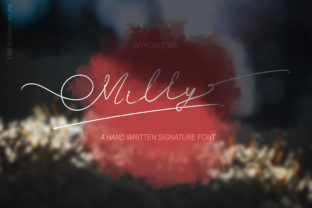
Milly Signature is a script font that leans into its handwritten nature. The curves are soft, the strokes vary slightly, and there’s a real sense of movement in each letter. It doesn’t feel like a digital font—it feels like someone sat down with a pen and wrote it by hand. That’s what makes it so appealing. It adds a human element to any design, which is exactly what the skincare brand needed.
On a logo draft, Milly Signature looked natural and inviting. It worked well as a headline font, giving the brand a warm and approachable personality. When paired with a clean sans serif for body text, it created a nice contrast without clashing. The font’s charm really came through when I placed it on a packaging mockup. The labels felt more like handwritten notes than mass-produced designs.
Real-World Testing: From Business Cards to Social Media
I tested Milly Signature across several design assets. On a business card, it stood out without being overwhelming. The font didn’t lose its character even at smaller sizes, which is a big plus. For social media layouts, it added a touch of personality to headers and captions. It worked especially well for Instagram posts where the brand wanted to highlight a handmade or artisanal aspect.
On a website header, Milly Signature gave the homepage a unique identity. It wasn’t too flashy, but it had enough presence to draw attention. When used in a poster or flyer, it helped reinforce the brand’s story—something that’s crucial in editorial design.
When Milly Signature Shines and Where It Might Not Fit
Milly Signature excels as a display or logo font. Its personality makes it ideal for short phrases, headlines, and branding elements that need to stand out. It’s not the best choice for long blocks of text, especially in small sizes. If you’re designing for a corporate or formal brand, it might not be the right fit. But for a boutique, a creative studio, or a handmade shop, it’s a great option.
The font also works well when paired with other typefaces. A classic serif font can balance its fluidity, while a modern sans serif can create a fresh, contemporary look. I found that pairing it with a clean, neutral typeface helped keep the overall design from feeling too busy.
Practical Tips for Using Milly Signature
If you’re considering using Milly Signature in your next project, test it in different contexts. Try it on a shop sign, product label, or printed card to see how it holds up. Make sure it reads clearly in all sizes, especially if it will be used in print or on digital screens.
Also, check the font’s licensing before using it in client work. Commercial use often requires a separate license, and it’s important to understand what you’re allowed to do with the font. Some fonts have restrictions on web use or embedding, so always double-check the terms.
For those who love handwritten styles, Milly Signature offers a lot in terms of versatility and charm. It’s a premium font that brings authenticity to any design, making it a valuable addition to any designer’s toolkit.